
Patient Abuse & Neglect
Last Updated 04/2026
English
30-Day Money Back Guarantee
Full Lifetime Access
Finish in
20 min! Run Time
20 min! Run Time
Made for for
Employees
only
Employees
only
Certificate
of Completion
of Completion
Mobile -
Friendly
Access
Friendly
Access
What you'll learn
Describe the five types of patient abuse and characteristics of each.
Recognize common signs of patient abuse and neglect.
Recall the importance of prompt reporting and proper documentation.
Describe ways to prevent patient abuse and neglect.
Description
Patient abuse and neglect represent some of the most serious violations of care that can occur in a healthcare setting — yet many cases go unrecognized and unreported due to inadequate training among healthcare professionals. Elderly patients and those with physical or mental disabilities are at heightened risk, as are residents of long-term care facilities where vulnerable individuals may have limited ability to advocate for themselves. This course is designed to give healthcare workers the knowledge they need to identify, report, and help prevent patient abuse and neglect in any care environment.
Learners will explore the five types of patient abuse — physical, emotional, sexual, financial, and neglect — and the distinguishing characteristics of each. The course covers the common signs and indicators of abuse and neglect that healthcare workers may observe during routine patient interactions, equipping employees to recognize warning signs that might otherwise go undetected. A dedicated section on reporting and documentation reinforces the importance of prompt, accurate reporting and outlines the legal and regulatory obligations healthcare workers must fulfill when abuse is suspected.
The course concludes with practical strategies for preventing patient abuse and fostering a culture of dignity, respect, and accountability in the care environment — drawing on key federal standards including the Elder Justice Act, the Nursing Home Reform Act, and The Joint Commission standards.
System Requirements
See System Requirements in the Coggno Knowledge Base
Table of Contents
1. Introduction and Objectives
2. Types of Abuse
3. Signs of Abuse and Neglect
4. Reporting Abuse and Neglect
5. Preventing Abuse and Neglect
Patient Abuse & Neglect
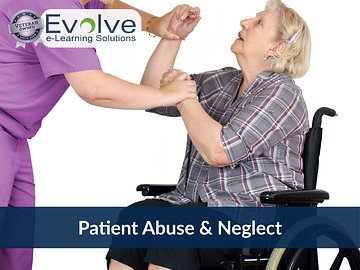
Patient Abuse & Neglect
Patient abuse and neglect represent some of the most serious violations of care that can occur in a healthcare setting — yet many cases go unrecognized and unreported due to inadequate training among healthcare professionals. Elderly patients and those with physical or mental disabilities are at heightened risk, as are residents of long-term care facilities where vulnerable individuals may have limited ability to advocate for themselves. This course is designed to give healthcare workers the knowledge they need to identify, report, and help prevent patient abuse and neglect in any care environment.
Learners will explore the five types of patient abuse — physical, emotional, sexual, financial, and neglect — and the distinguishing characteristics of each. The course covers the common signs and indicators of abuse and neglect that healthcare workers may observe during routine patient interactions, equipping employees to recognize warning signs that might otherwise go undetected. A dedicated section on reporting and documentation reinforces the importance of prompt, accurate reporting and outlines the legal and regulatory obligations healthcare workers must fulfill when abuse is suspected.
The course concludes with practical strategies for preventing patient abuse and fostering a culture of dignity, respect, and accountability in the care environment — drawing on key federal standards including the Elder Justice Act, the Nursing Home Reform Act, and The Joint Commission standards.
Learners will explore the five types of patient abuse — physical, emotional, sexual, financial, and neglect — and the distinguishing characteristics of each. The course covers the common signs and indicators of abuse and neglect that healthcare workers may observe during routine patient interactions, equipping employees to recognize warning signs that might otherwise go undetected. A dedicated section on reporting and documentation reinforces the importance of prompt, accurate reporting and outlines the legal and regulatory obligations healthcare workers must fulfill when abuse is suspected.
The course concludes with practical strategies for preventing patient abuse and fostering a culture of dignity, respect, and accountability in the care environment — drawing on key federal standards including the Elder Justice Act, the Nursing Home Reform Act, and The Joint Commission standards.
Frequently Asked Questions
This course is designed for employees who need to complete Patient Abuse & Neglect training
Yes. This course is designed to meet applicable federal requirements and commonly mandated state standards. Always confirm specific state or industry requirements with your local regulations.
The course takes approximately 20 minutes to complete and can be paused and resumed at any time.
Yes. Learners receive a downloadable certificate upon successful completion, which can be used for compliance records and audits.
Yes. You can assign this course to individuals or groups using Coggno’s LMS, or purchase multiple seats for your team.
Yes. This course can be exported for delivery in most learning management systems (SCORM compatible).
Yes. The course is fully self-paced and available 24/7.
Yes. This course includes a knowledge check to reinforce learning and verify completion.
Learners have lifetime access from the date of purchase.
Yes. A preview is available so you can review the course format and content before purchasing.
Yes. Content is reviewed and updated as regulations and best practices change.
Yes. This course is available for free with an active Prime Subscription.
Yes. Refund requests can be submitted within 30 days of purchase.
OSHA Compliance
- Bloodborne Pathogens Training (21)
- Electrical Safety (73)
- Fire Safety Training (50)
- First Aid Training (34)
- Forklift Training (45)
- HazCom (Hazard Communication) (51)
- Lockout/Tagout (LOTO) (24)
- OSHA 10 Hour Training (6)
- OSHA 30 Hour Training (2)
- PPE (Personal Protective Equipment) (65)
- Slips, Trips & Falls (72)
- Workplace Safety (1001)